
Designing a permissions system that scales with client complexity
I led the multi-version redesign of the core access management system to support both small teams that need direct control and large organizations that rely on bulk management—without forcing unnecessary complexity on either.
Role
Product Designer, UX Researcher
Scope
E2E UX design, Research, Strategic design
Platform
Web, B2B
Timeline
Sept. 2025 - Present
Team
Design Manager
Product Manager
Engineering Lead
Engineering Team
🔒
Confidentiality Agreement
Due to a confidentiality agreement, detailed visuals and specifics are not publicly shared. I'm happy to walk you through my process, design decisions, and outcomes in more depth — feel free to reach out at ashleyhelento.design@gmail.com.
The challenge
Enterprise clients managing hundreds of users need fundamentally different tools than smaller teams — yet both were being served by the same permissions system. Through iterative research and two versions, I uncovered a core tension: simplifying for one client type created friction for the other.
The real question became: how do you design a system flexible enough to serve both small and large clients, without burdening either?
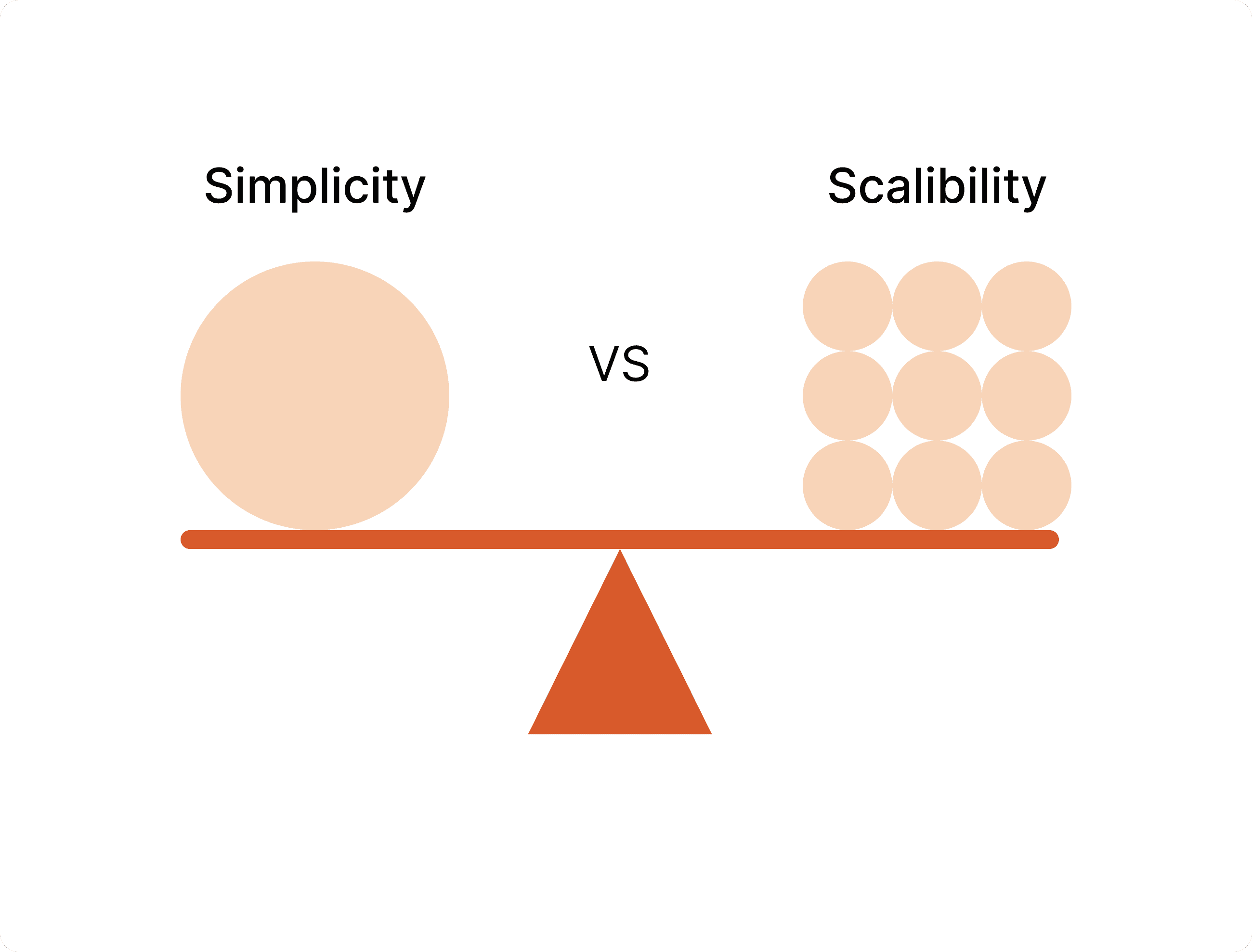
The challenge
Balancing simplistic design and differing client scalibility needs.
My Role
End-to-end ownership across strategy, systems design, and UX/UI. I co-led execution with another designer, taking primary ownership of the system architecture and scalable bulk management approach before overtaking the entire project.
50%+ reduction in total permissions — by rearchitecting the access model, we dramatically simplified the permission landscape for commercial banking clients
50% fewer clicks to assign permissions — early validation showed significantly reduced setup friction for smaller clients, with improved visibility into user access across all client types
Conducted over 5 rounds of client, proxy, and associate research across multiple rounds to surface behavioral patterns across client types
Ran iterative usability testing cycles and synthesized findings to drive design decisions and stakeholder alignment
Mapped competing approaches (3+ directions) against a decision matrix weighing usability, scalability, and technical feasibility
Designed a dual-mode system supporting both granular, per-user control and optional bulk management — without forcing unnecessary complexity on either user type
Partnered closely with Product and Engineering to align on requirements and design in phased milestones given a tight timeline
Intuitive design and self-service support will reduce servicing calls and save Capital One costs
What I did
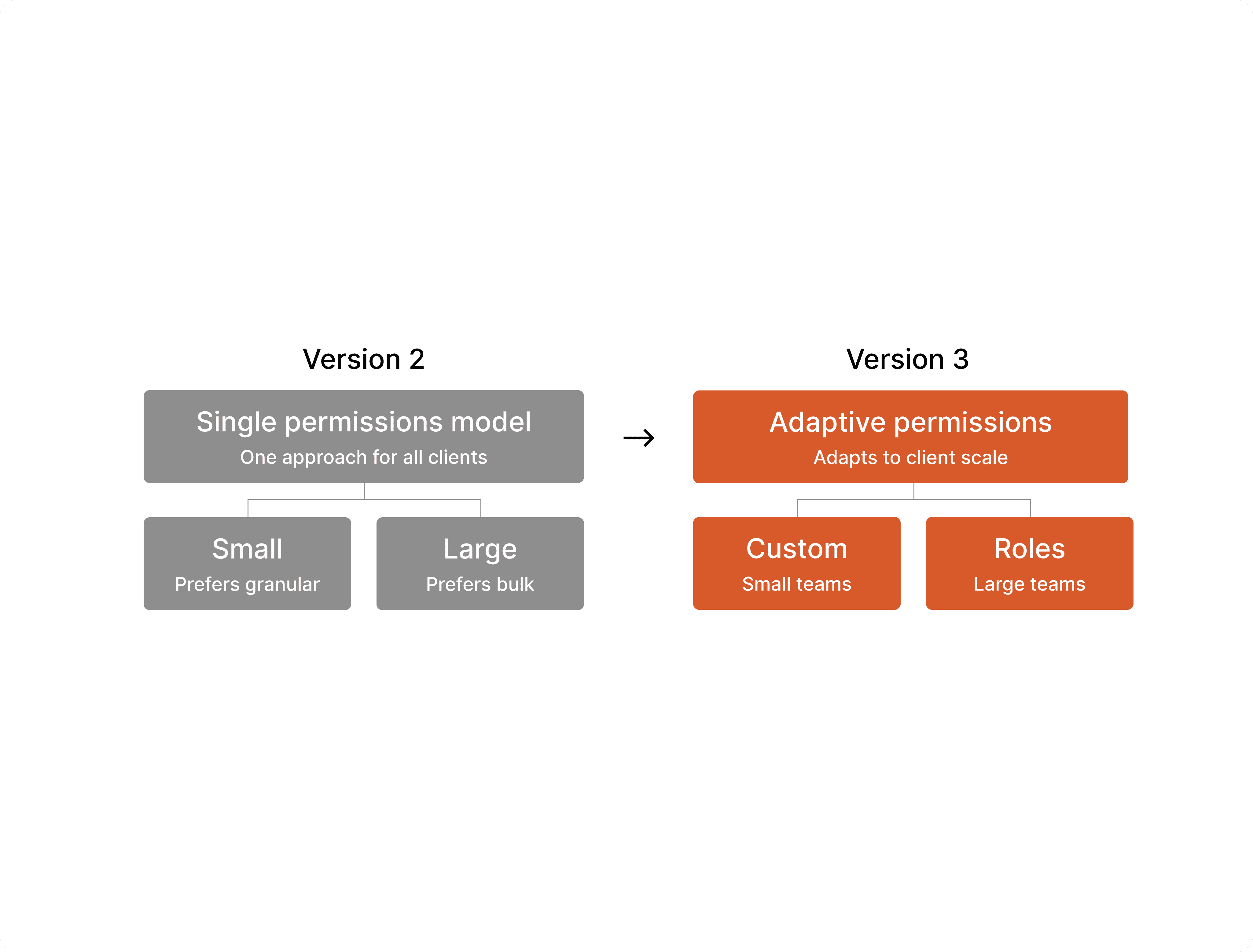
Shifting our strategy
Our previous iterations focused on a single model. We introduced an adaptive model with Version 3.
Skills demonstrated
Cross-functional collaboration
Design strategy
Edge case thinking
Interaction design
Iterative testing
Milestone-based delivery
Research & synthesis
Stakeholder alignment
Systems design
Outcome
Improved usability
Early validation showed reduced setup friction for smaller clients and improved visibility into user access across all clients.
Uncovered scalability needs
Enterprise clients surfaced additional scalability needs — informing the next phase of work.
NEXT POST