Capital One Design System Adoption: Streamlining the Migration Journey
I led a strategic UX initiative that transformed Capital One's design system from simply a collection of components into a comprehensive service with clear adoption pathways, enabling Capital One to achieve its goal of enterprise-wide experience consistency.
Role
Service designer
Scope
Workshop facilitation, Service blueprint
Platform
Process design
Timeline
Mar. - May 2023
Team
Design Manager
Design Systems Team
Challenge
Context
Capital One operated with fragmented design systems across its enterprise. While my team had released a collection of primary components to create cohesion and save time, adoption remained difficult as teams struggled to balance migration work with ongoing feature development.
Our primary users consisted of:
Feature designers across the company
Developers building features across the company
My team as we’re a small team and who will are building out components and supporting the migration process
The problem
How might we make adopting the design system smoother, easier, and more efficient while minimizing disruption to teams' primary work?
Discovery
Research
I ran interviews with adopting teams to build a customer journey map.
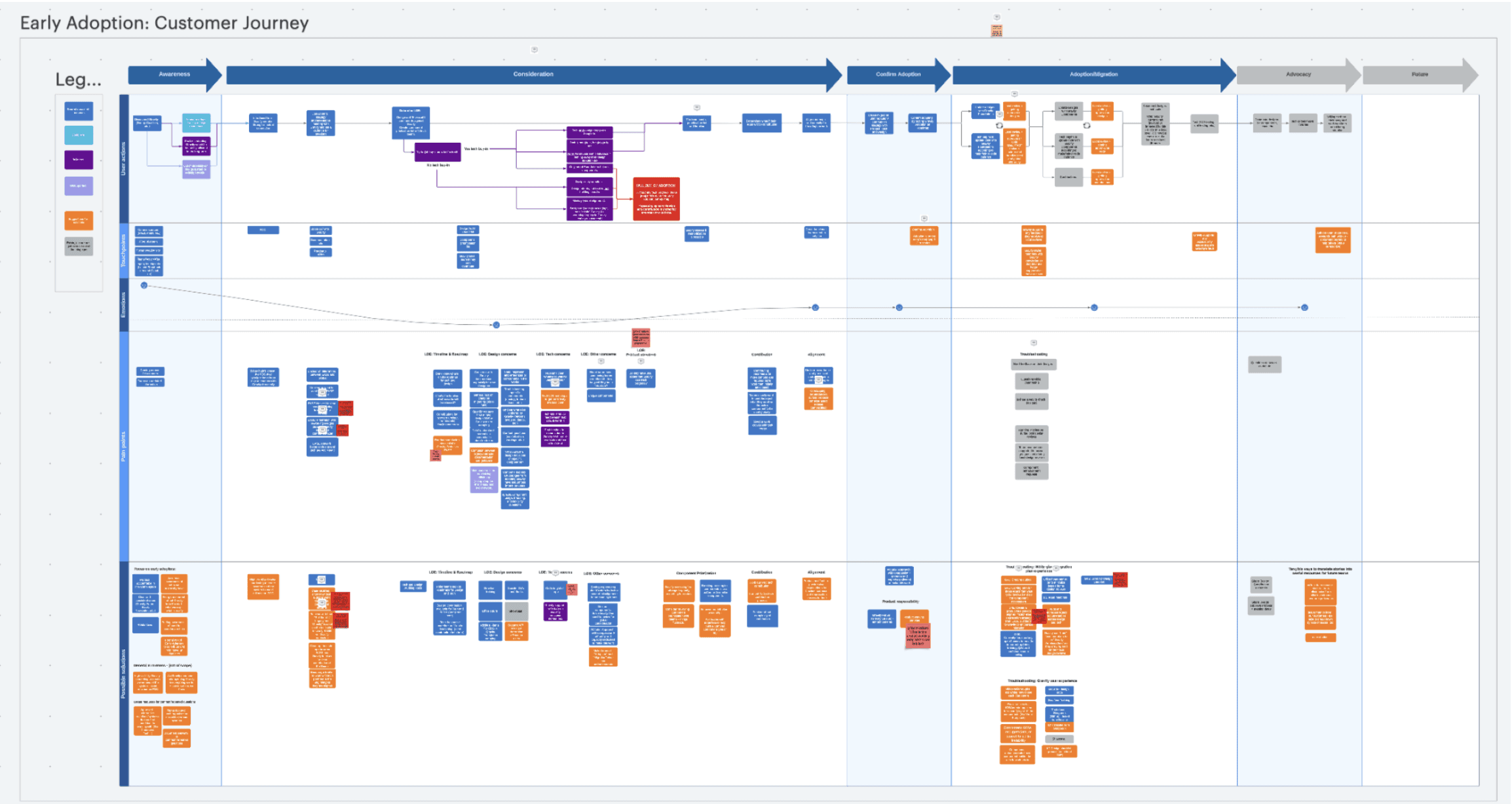
Customer journey map
Map of all the steps teams take to adopt the design system.
Based on our findings, I elevated the journey map to a service blueprint. As the adoption process included both our end users and my team, this map provided a comprehensive view of the process and allowed us to really call out the necessary painpoints.
This discovery highlighted the key pain points and opportunities of the adoption process, laying the groundwork for subsequent workshops.
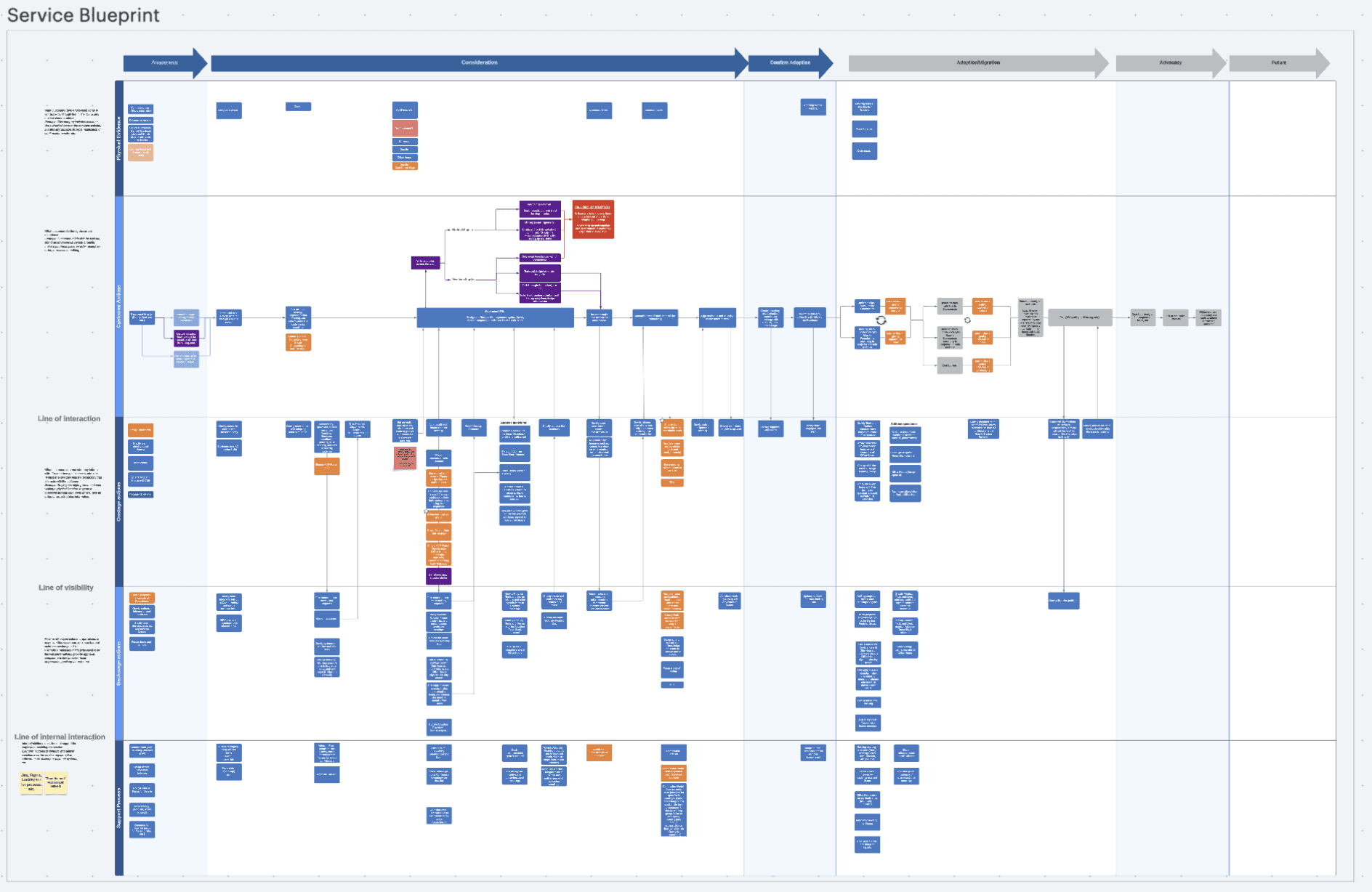
Service blueprint
Built upon the customer journey map by tracing how my design systems team supports adopting teams at each step. The map identifies gaps and pain points in the process today.
Key insights
Adopting designers and developers approached design system migration as "side of desk" work while juggling ongoing projects
Our small design system team is a bottleneck for migration:
We didn’t have all the components users needed to completely migrate their designs.
Users wanted to contribute back components they have locally designed and developed, but there was no clear process to do so.
Users manually sought help by direct messaging our lead designer or teammates, creating a bottleneck.
Teams set up one-off meetings with our team to start the migration process
Prioritization Workshop
To address the overwhelming list of potential improvements, I proposed and facilitated a prioritization workshop using a Value vs. Effort matrix. I landed on this workshop for two reasons:
I was the most junior designer at the time so I knew I had to lean on my teammates for plausible solutions
My team were the experts who would be actively interfacing with the adopting teams. It would be most impactful to involve them in the solutioning portion.
The workshop
Team members were split into 2 groups with roughly equivalent expertise in each group
Both introverted and vocal team members could contribute equally as there was a combination of heads down time and share outs
Each group translated pain points I identified into concrete, prioritized action items
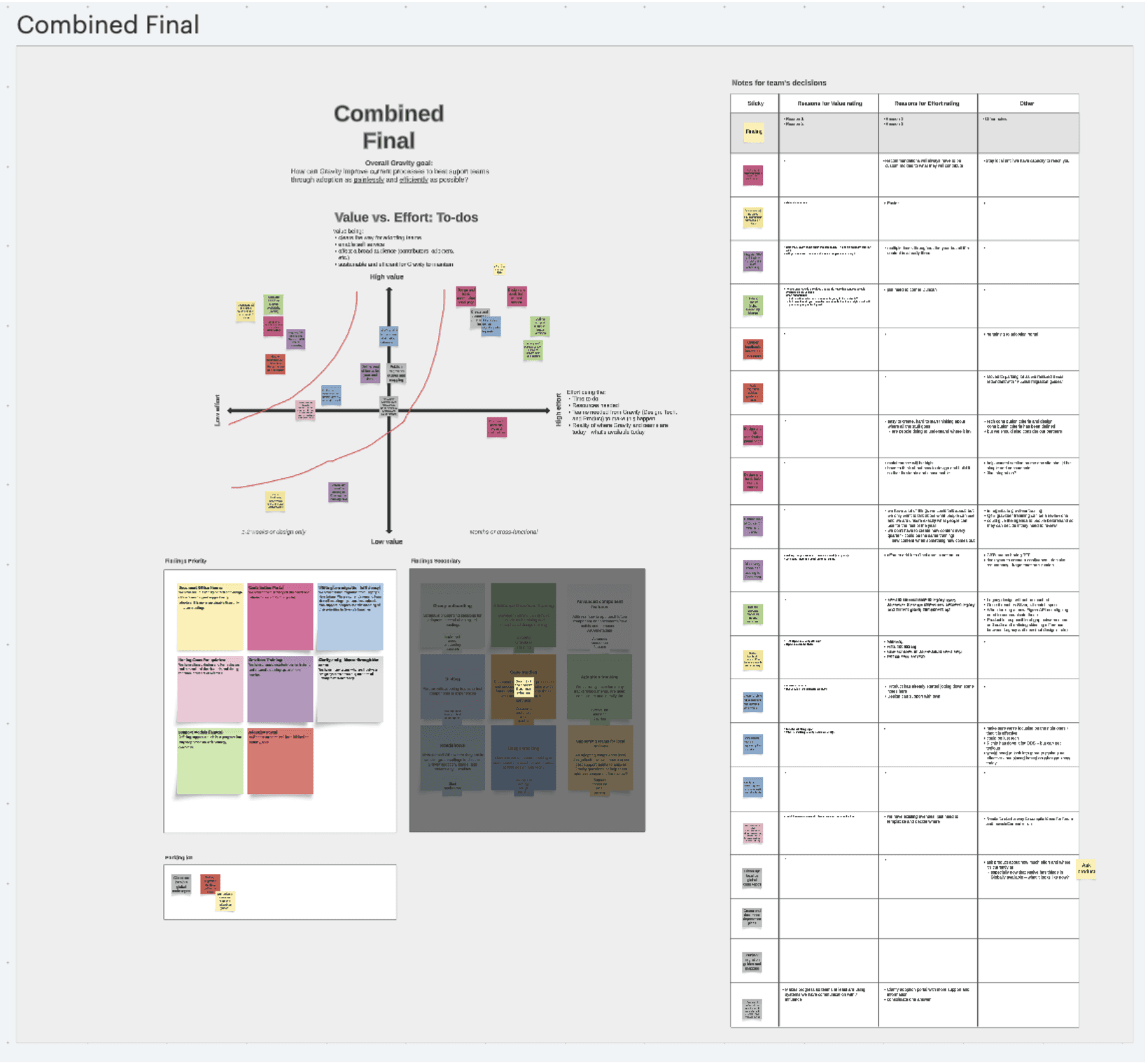
Value vs. Effort Matrix
Each team used a board like this to brainstorm ideas and prioritize them based on value provided and effort needed.
Next steps
I quickly offboarded off the team after, but handed off a Now, Next, Later deck of actionable, tangible steps to my team.
Outcome
Impact
My research simplified the complex dependencies of system adoption into a clear service blueprint and actionable roadmap
This strategic approach transformed our design system from simply a collection of components into a comprehensive service with clear adoption pathways, enabling Capital One to achieve its goal of enterprise-wide experience consistency while respecting teams' resource constraints.
Results
Enterprise-wide roadmap adopted — the prioritized Now/Next/Later roadmap I handed off was adopted across product teams, transforming the design system from a component library into a full service with clear adoption pathways.
Contribution Portal: Designed clear contribution pathways for users to enhance the system
I worked closely with my PM to define and create rough MVPs of how the contribution portal could look like
Comprehensive documentation: Clear self-service documentation for teams to refer to async
Delivered a dedicated landing page on our documentation site providing knowledge and support for adopting designers and developers.
Structured Support Model:
Swapped 1:1 team meetings with structured office hours and selective white-glove services for teams that aligned with strategic priorities.
Identified strategic opportunities for design system training (onboarding, quarterly sessions)
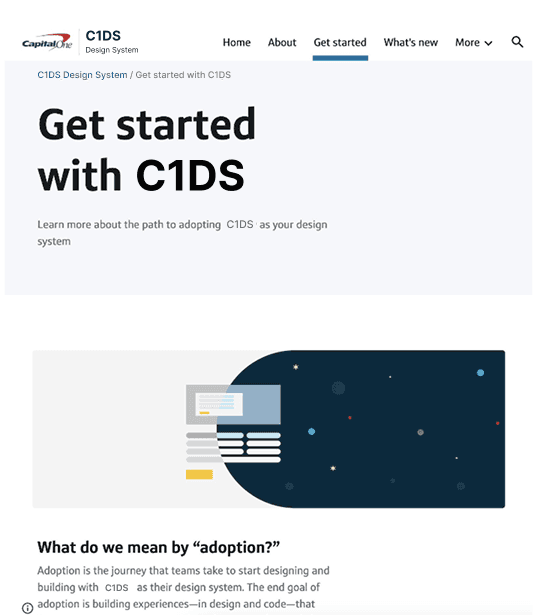
Adoption page
One of the solutions we landed on was an adoption page where internal teams can self-service and kickstart the adoption process. This is the adoption page I designed for our internal documentation site.
Reflection
Meeting designers where they are
Effective workshop design means meeting participants where they are — accounting for who's in the room shapes what actually lands.
Beyond the user journey
I also came away with a deeper appreciation for the back-end of a process. A seamless user experience isn't just about what users see; it requires connecting the front-end to the operational layers behind it.
PREVIOUS POST